Breakdown VII — 100 Photos Explained
CORE IDEA
Photography Is About Life, Not Photos
What's popping, people — it's Dante. Today we're going deep. When you look at a large body of strong street photographs — hundreds of frames made over years, across markets, ceremonies, ordinary blocks, quiet edges — the same qualities keep surfacing. And the lesson underneath all of them is the same one every time: photography isn't about photography. It has everything to do with how you interact with humanity. The more you engage with life, the more your photographs come alive. Today we name the qualities that recur in every frame that works.
LEARNING OBJECTIVE
What You'll Walk Away With
By the end of this lesson you'll understand how strong frames — no matter the country, the year, or the subject — all reduce to a handful of principles. Be present. Engage with humanity. Observe everything. Solve visual puzzles. That's the whole game, and we're going to name exactly what recurs in the photographs that hold up.
WHY THIS MATTERS
First Principles Hold Across Every Scene
Here's why this matters: you will shoot in unfamiliar cities, weird light, chaotic crowds, and quiet suburbs, and the question will always hit — do my principles actually hold here? Yes. They do. When you notice the same qualities surfacing in strong frame after strong frame, regardless of where it was made, you develop the kind of confidence that doesn't shake when the location changes.
The Camera Reveals What the Eye Cannot
And here's the other reason this lesson matters: the camera is smarter than you think. You can sense the potential, but the camera often reveals what the eye cannot. A tattoo that turns out to echo the shape of what a person is holding. A worker's posture that unconsciously mirrors a statue behind him. A cast shadow that rhymes with a painted wall. These rhymes are everywhere, and half the time you only catch them after the fact. That's why you trust the process even when you can't see the whole picture yet.
MAIN TEACHING
Observation Means Everything in the Frame
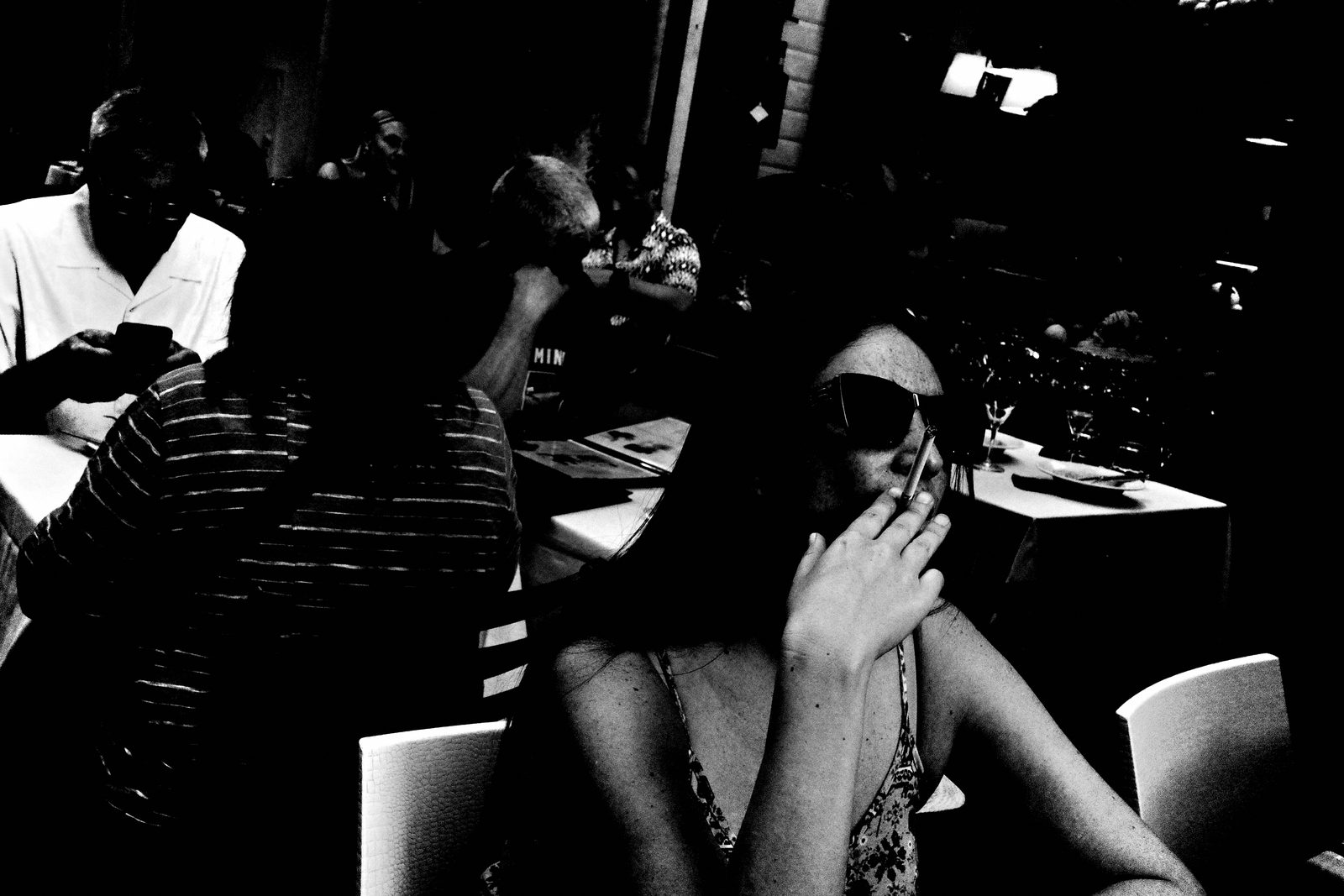
Every strong photograph is a product of being present and seeing deeply. A scene isn't just about the subject — it's about everything. The subject may be a person, but the frame also holds the object leaning against the wall, the line of a pole cutting into the sky, the architecture sitting in the background, the small props of a life. All those elements have to work together, and their visual weight has to balance. The moment you start seeing the whole rectangle instead of just the subject in the middle of it, your frames get denser and truer.
The Power of Gaze
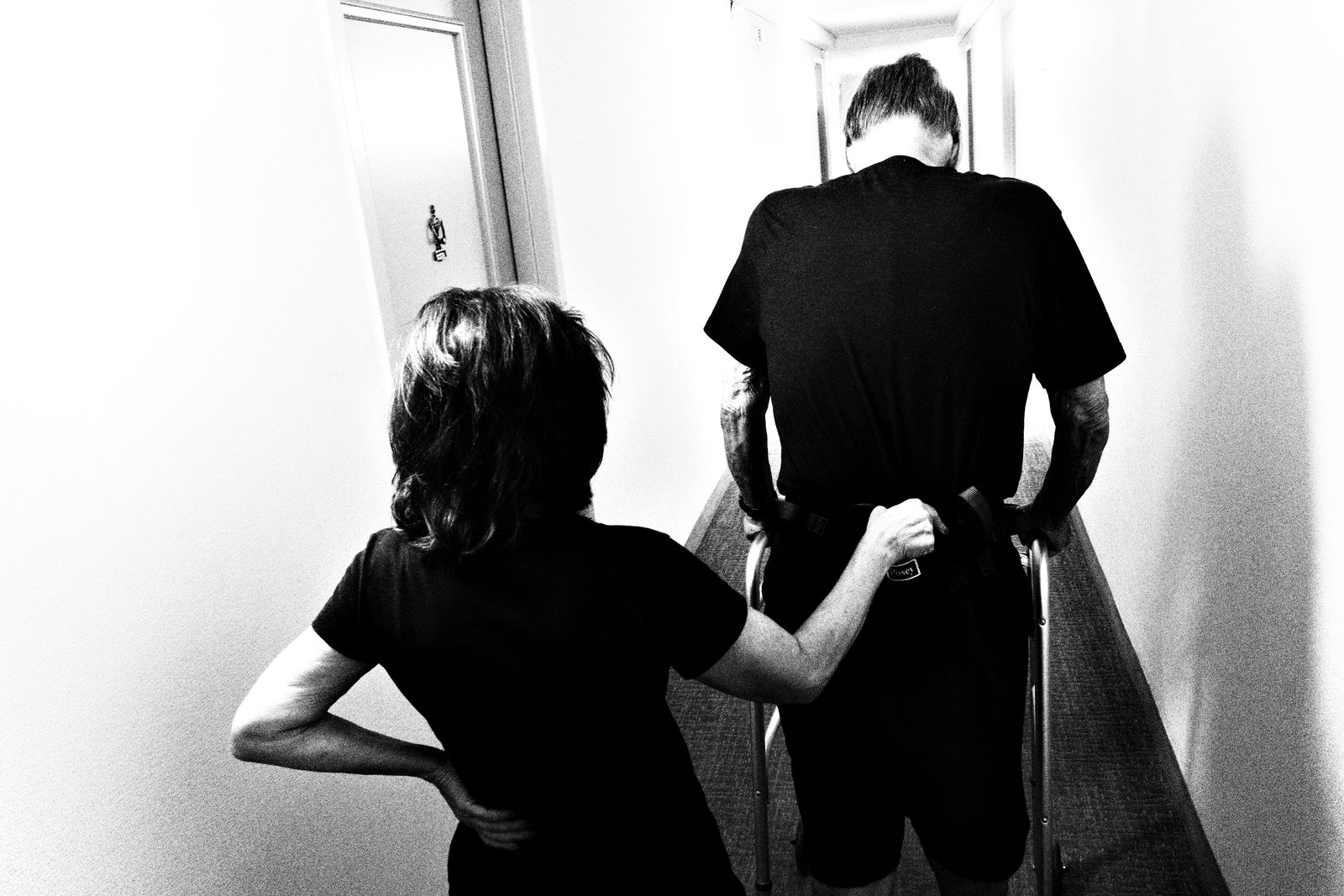
You can walk through a bustling market full of movement and come away with only one frame worth keeping — and it'll be the one where someone looked back at you. The eyes of the subject will be the thing that elevates the photograph. Everything else — light and shadow, movement, chaos — builds the tension. But it's the flicker of recognition in someone's gaze that makes an image breathe. Don't underestimate what a single, honest look at the lens can do.
Finding the Extraordinary in the Mundane
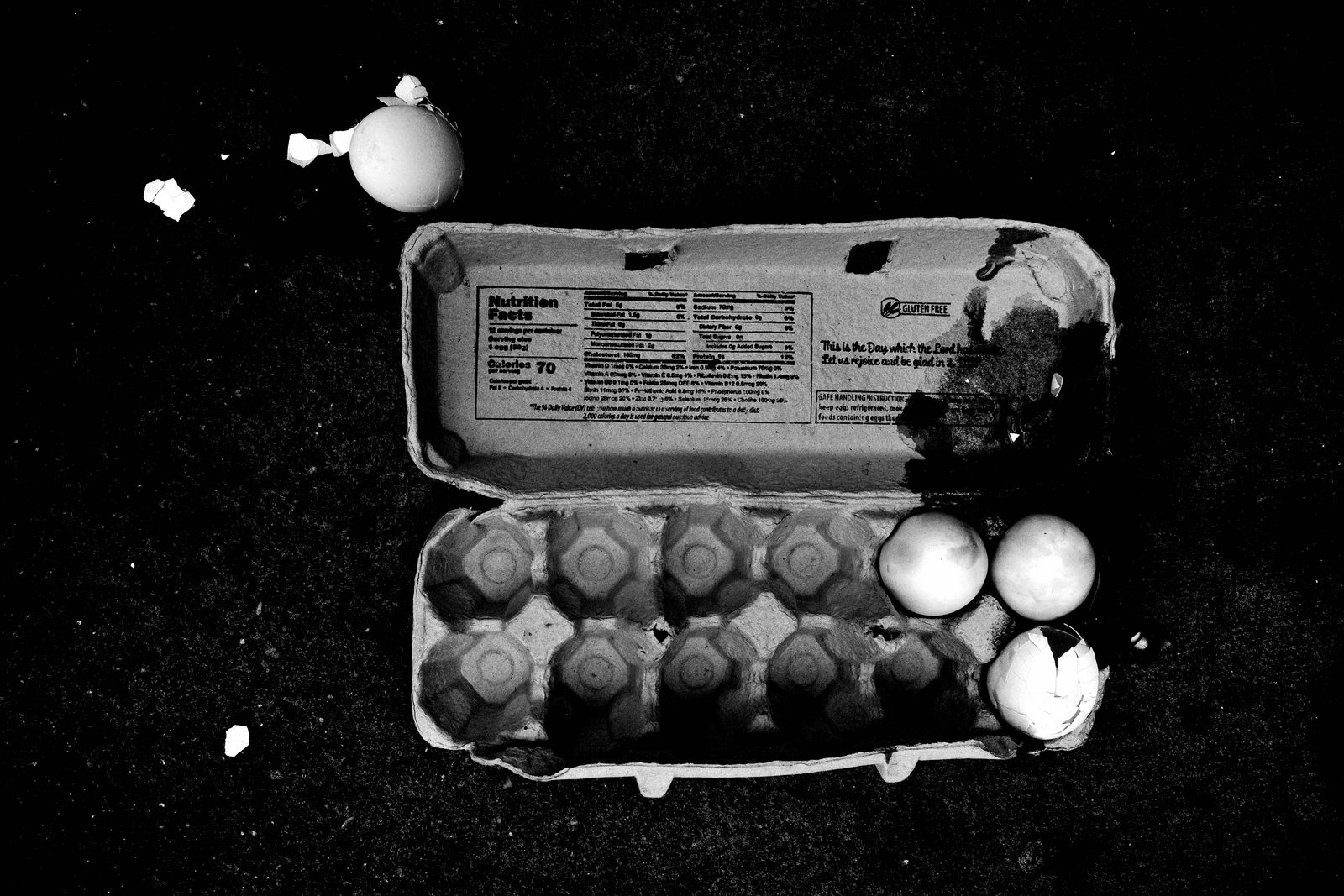
Street photography demands an ability to thrive in the ordinary. A child playing with a stick at sunrise. The way shadows stretch across a wall. A simple hand gesture echoing a pole in the background. These are visual puzzles waiting to be solved — and the camera is just the tool that allows me to solve them. The magic was already there. You just had to see it.
Commit Your Body to the Scene
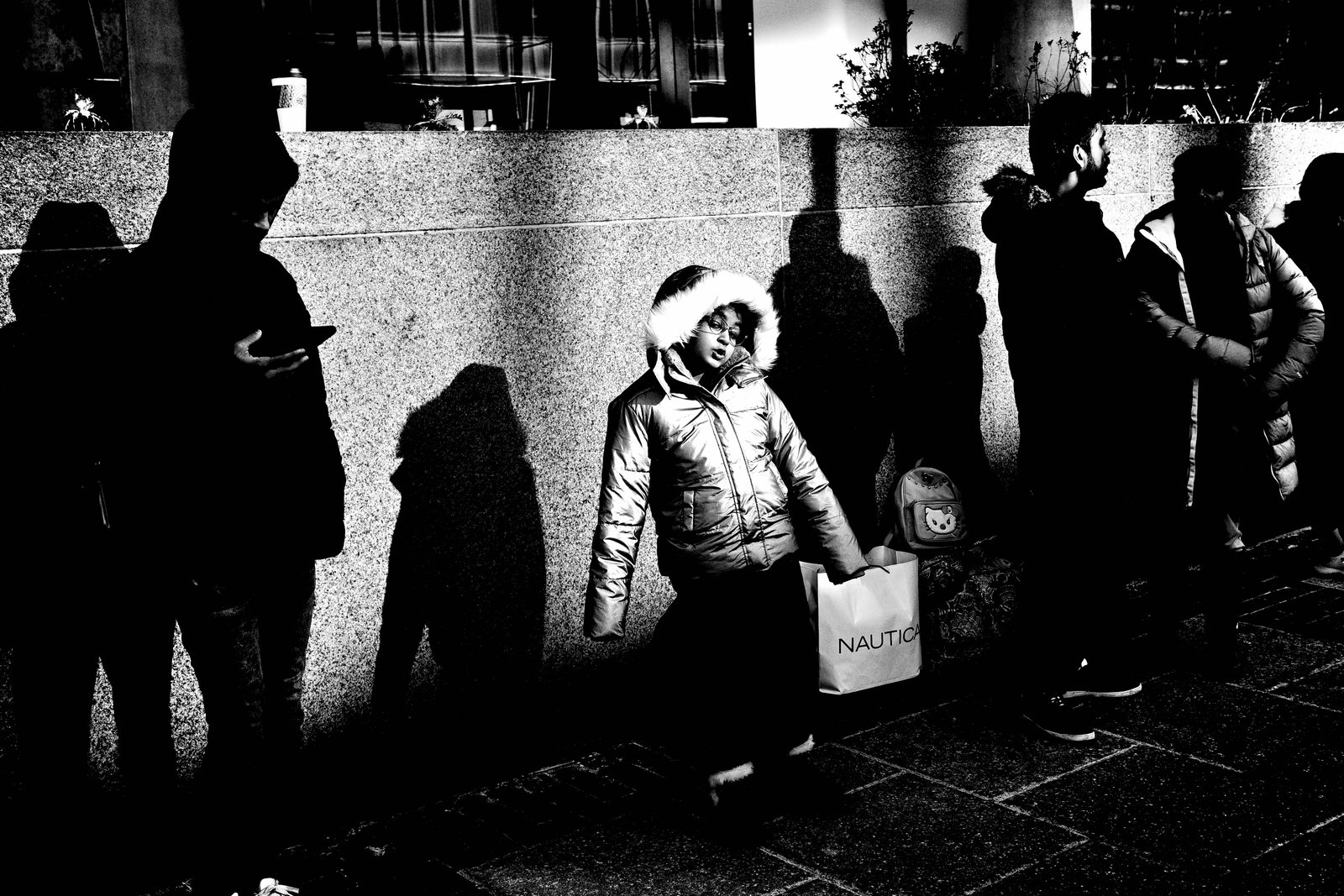
The best frames rarely come from watching safely from the sidelines. When something significant is unfolding — a ceremony, a gathering, a ritual full of feeling — you have to commit your body to it. Set your gear down, wade in, get physically inside the scene, and be ready for the single instant when a gesture rises above the crowd and everything resolves. And understand what that costs: sometimes the frame you're waiting for doesn't appear for days or weeks of showing up. That's what real presence costs — and it's worth every day.
Drop to the Emotional Level
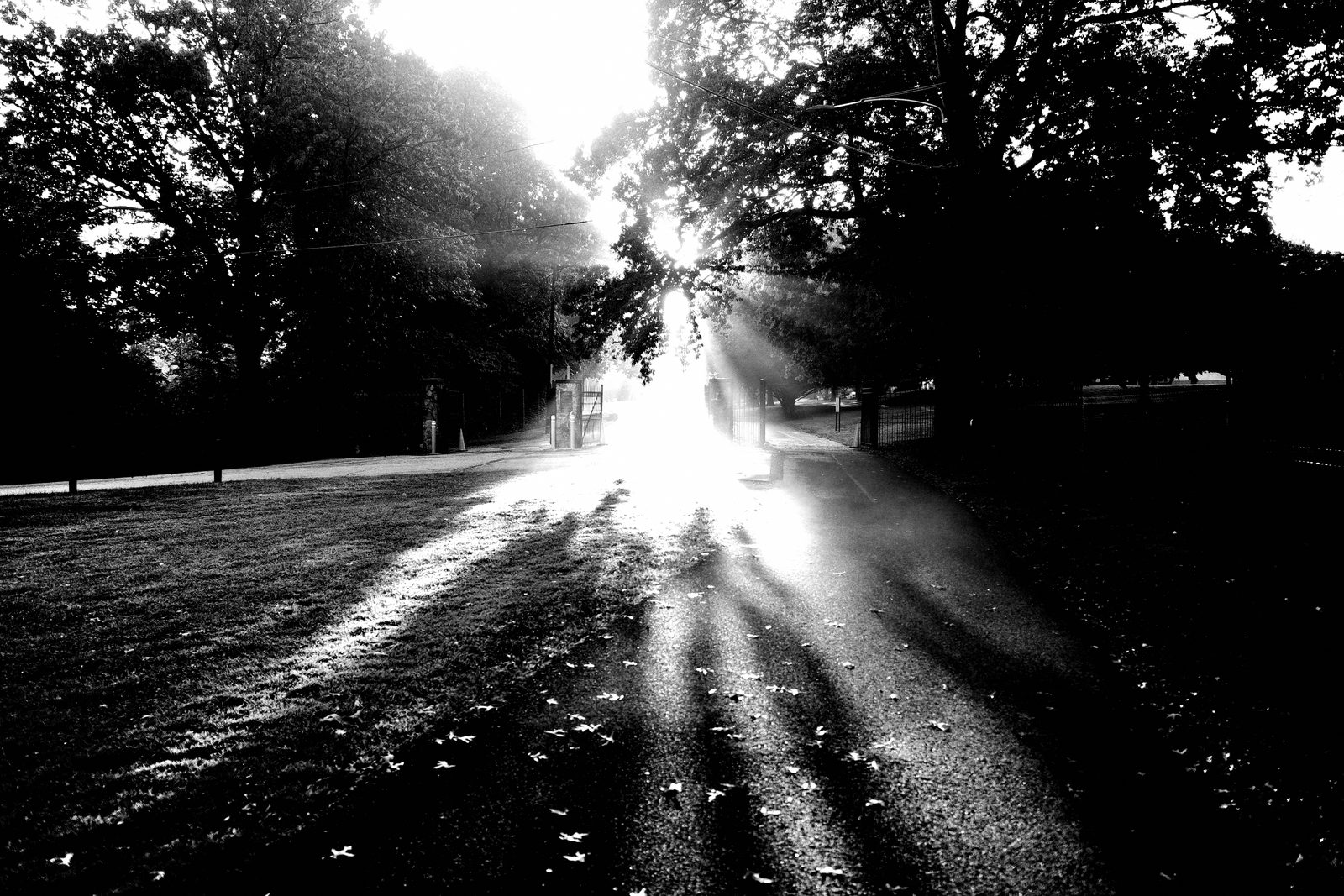
When you photograph raw emotion — grief, exhaustion, devotion — your physical position becomes an ethical and visual choice. Standing over someone and shooting down turns them into a specimen. Dropping low, getting to their level, framing their feeling against the quieter activity happening behind them — that's what separates a record from a photograph. The low angle says I'm with you, not above you, and the background gives the emotion its context. Be present in the feeling. Let it land.
Light Is Out of Your Control — Be Patient
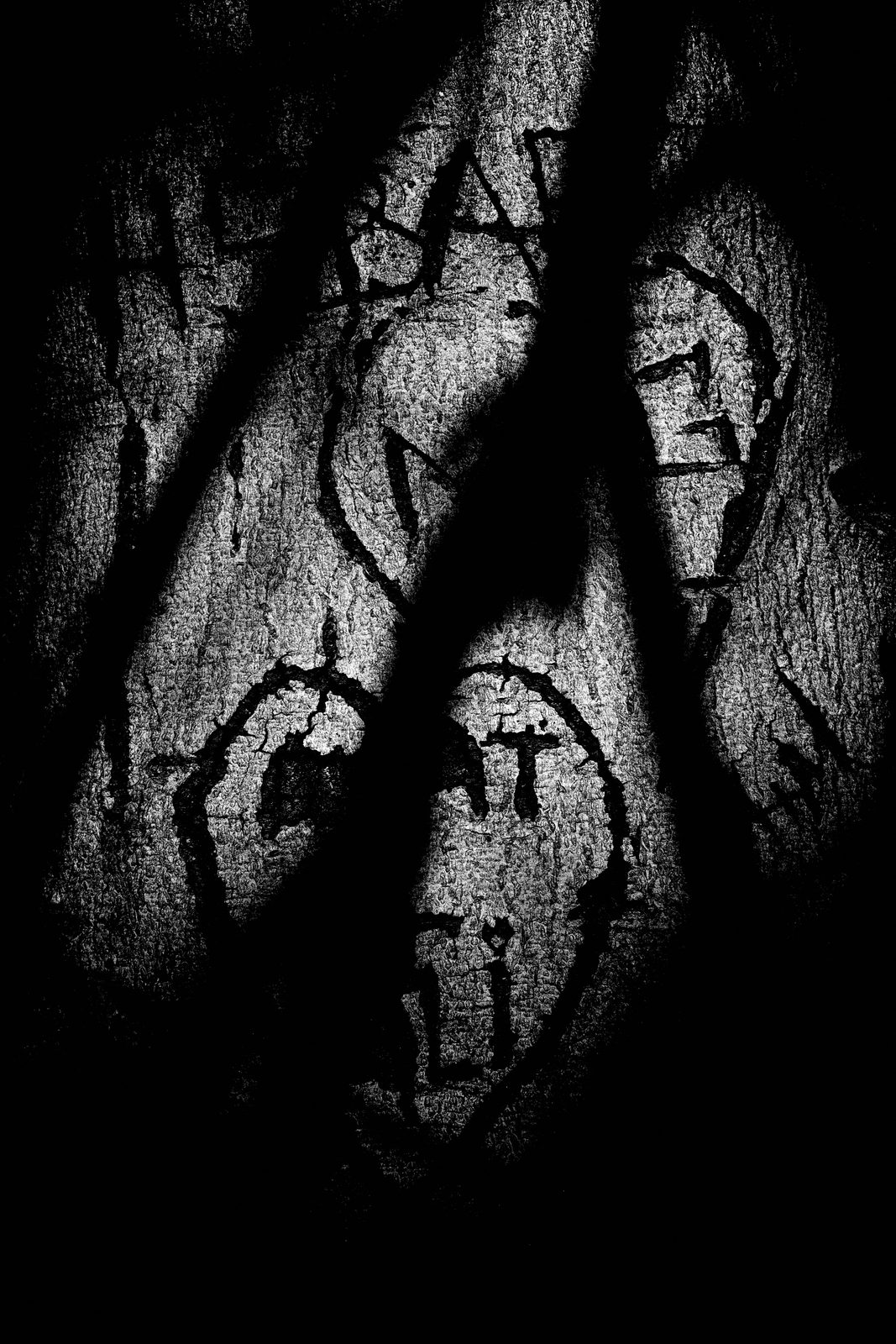
Light is out of our control, but if you're patient, it will give you a gift. A shadow that casts a perfect silhouette on the sidewalk. A shaft of sun that suddenly illuminates a face. The interplay of reflections across a shiny surface at just the right angle. You don't manufacture these moments — you position yourself, you wait, and you stay ready when the light decides it's time. Patience is what earns the gift light gives.
Keep Shooting When You Only Sense It
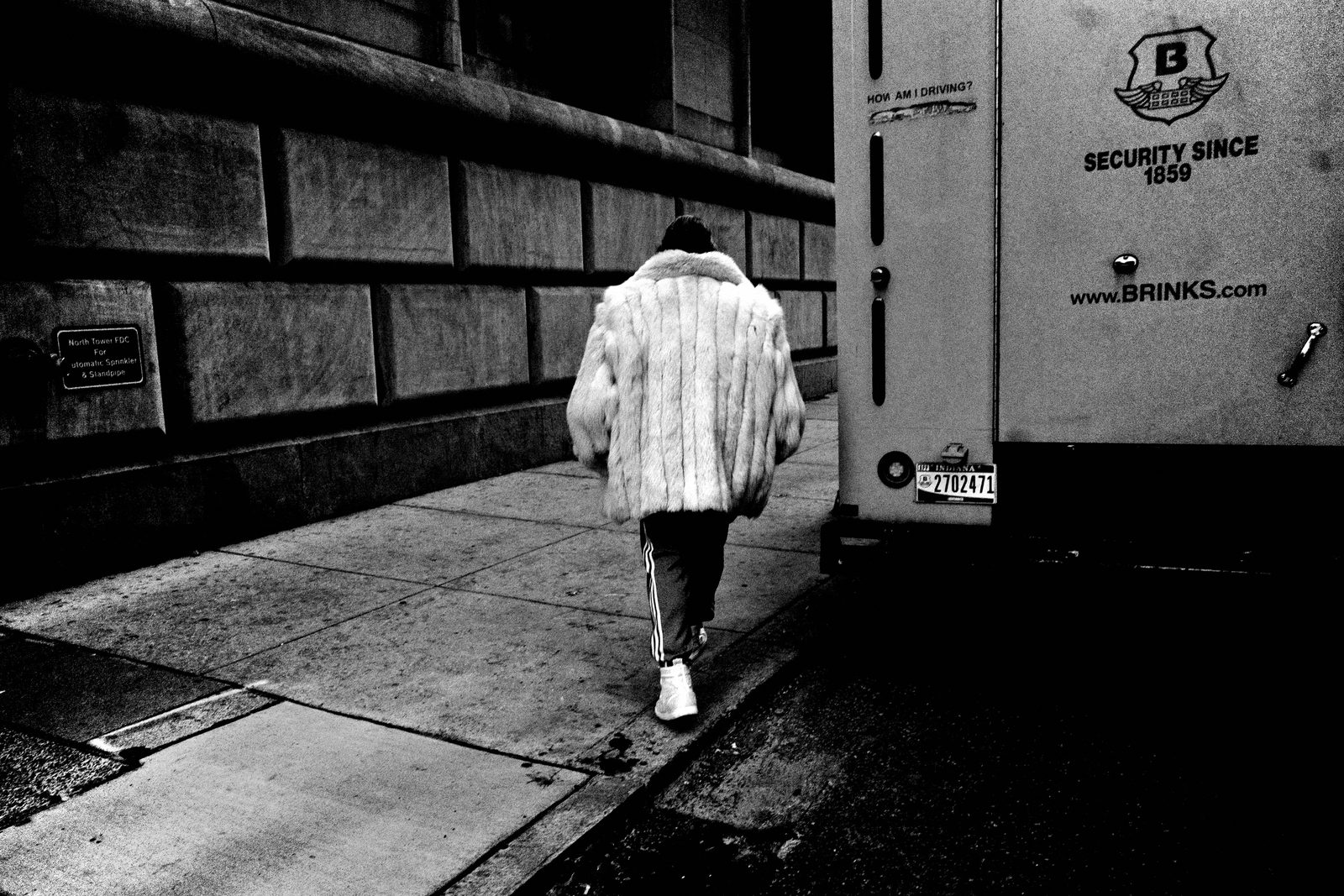
There will be scenes where your gut says there's something here but your eye can't quite name it — an alignment, an echo, a rhyme between two elements you only half-register. Shoot it anyway. Again and again you'll open a frame later and find the thing your conscious mind missed: a pattern in the background repeating a shape in front, a detail on a person that comments on what they're doing. Photography is full of these unexpected gifts. You can sense the potential, but the camera often reveals what the eye cannot. This is why you keep shooting even when you're not sure. The image knows things you don't.
Repetition Builds Familiarity; Familiarity Reveals Patterns
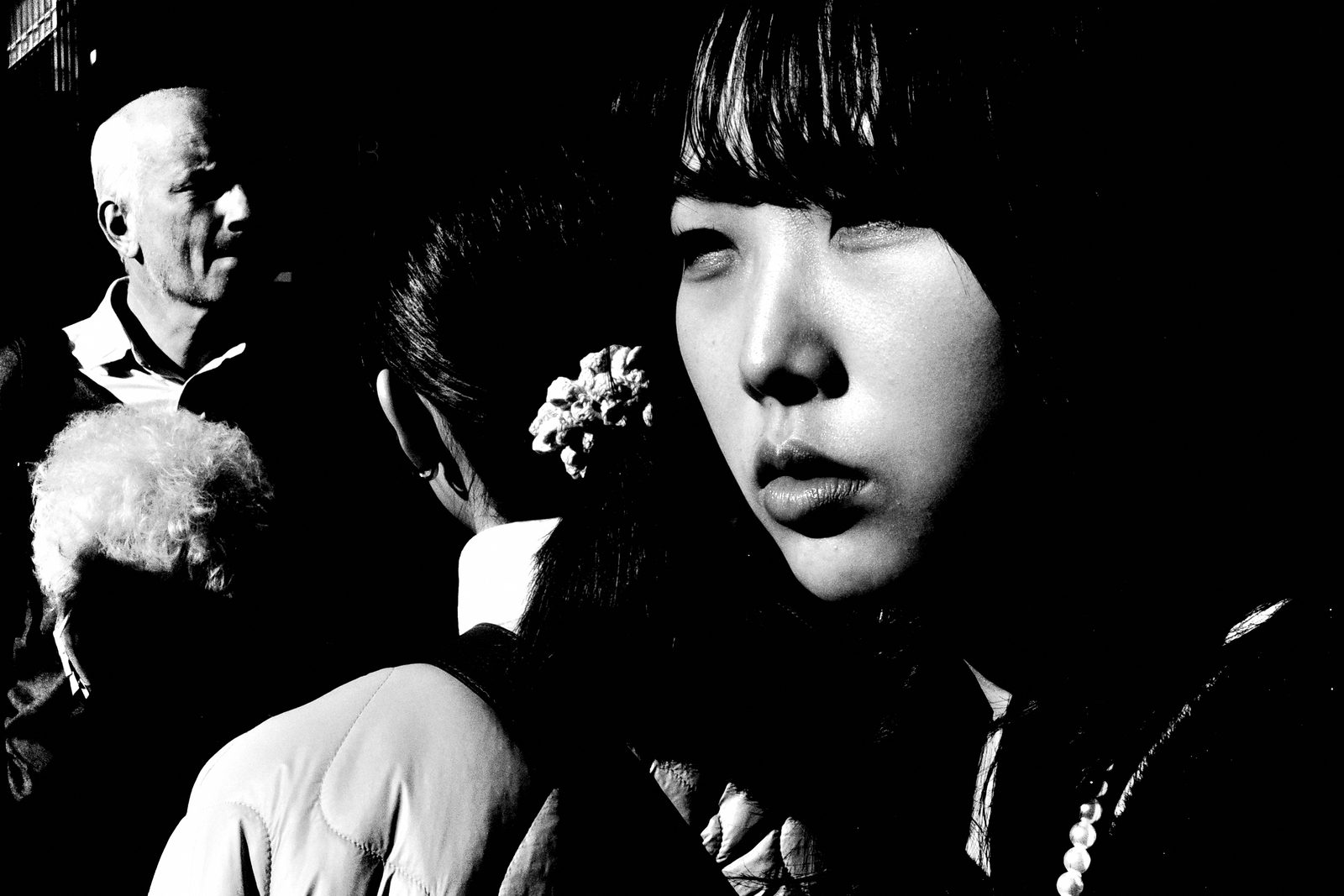
Some of the best images come from revisiting the same locations over and over. Every place has its regulars — the character who tends his animals at the same hour, the kids who skate the same ledge, the people who fish the same stretch of river at dusk. You can't see any of that on a first pass. Repetition builds familiarity. Familiarity reveals patterns. Patterns lead to moments. Don't abandon a location just because you didn't get the shot the first time. Go back. Keep going back. The place will open up.
Making Order Out of Chaos
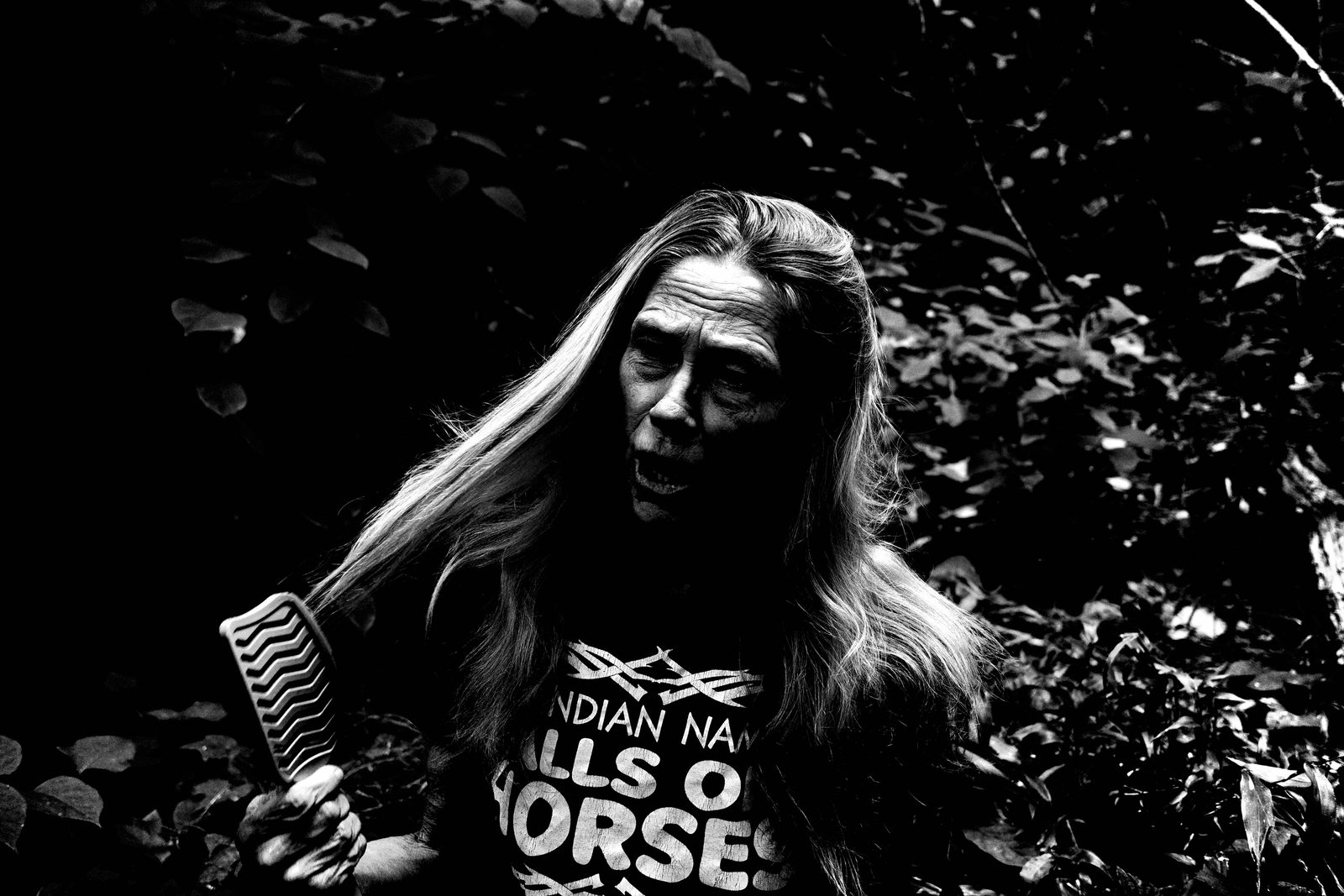
Drop into a cramped, busy, chaotic scene and the instinct is to freeze — there's too much happening. But the work is always the same: simplify. Separate the gestures so they don't collide. Balance the figures against the background. Find the one angle that reads clearly. The key is to isolate just enough to make order out of disorder — not to sterilize the energy, just to give the eye a path through it. Chaos is not the enemy. It's the raw material. Your eye is the editor.
Fishing vs. Hunting
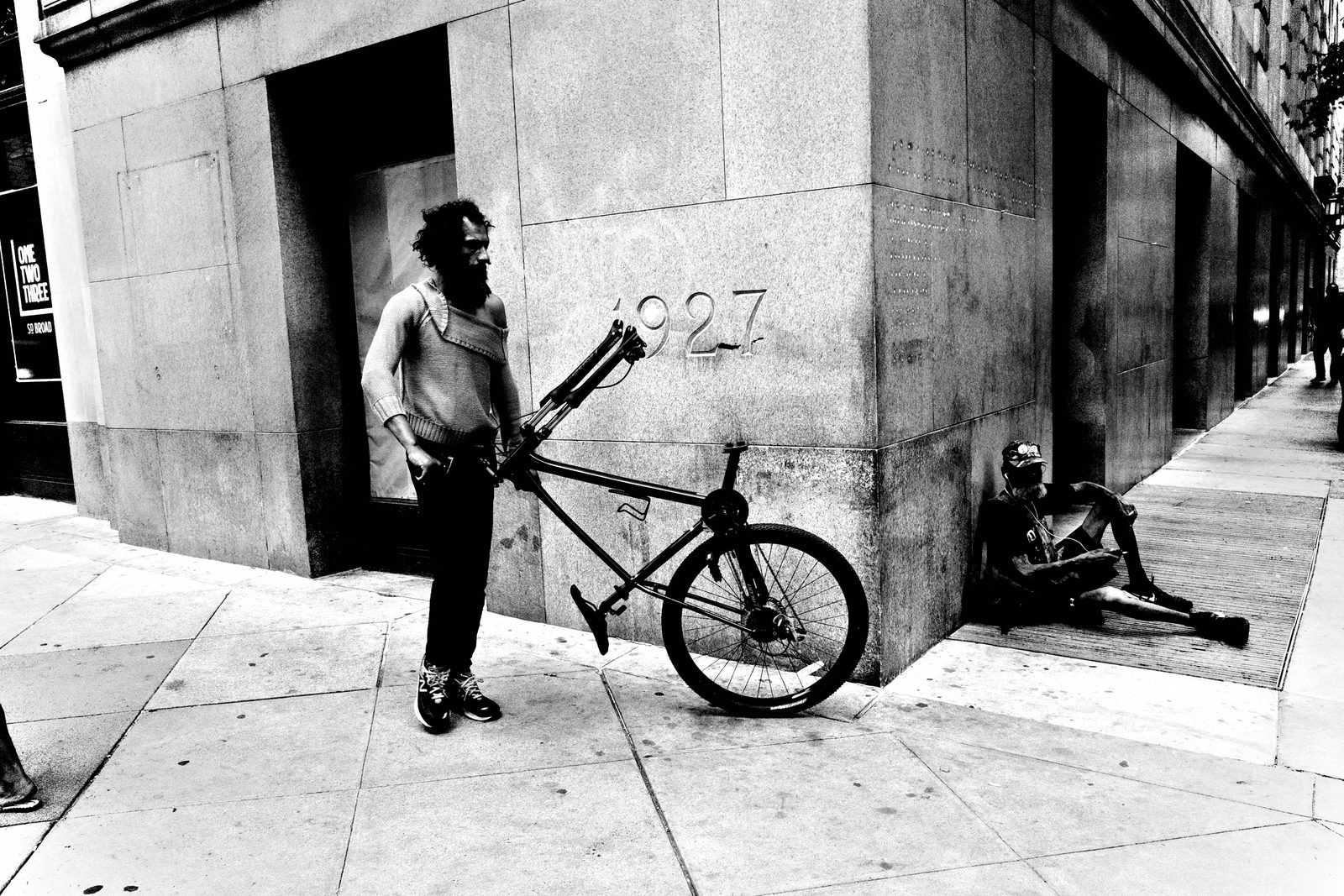
There are two ways to approach street photography. Fishing — finding an interesting scene, setting up, and waiting for the right element to enter the frame. Hunting — seeing something happen and reacting instantly. Both techniques work. The key is knowing when to use each. A calm scene with strong bones and steady foot traffic asks you to fish; a sudden event that won't repeat asks you to hunt. Read the scene first, then decide how to move.
You Don't Always Know the Frame in Advance
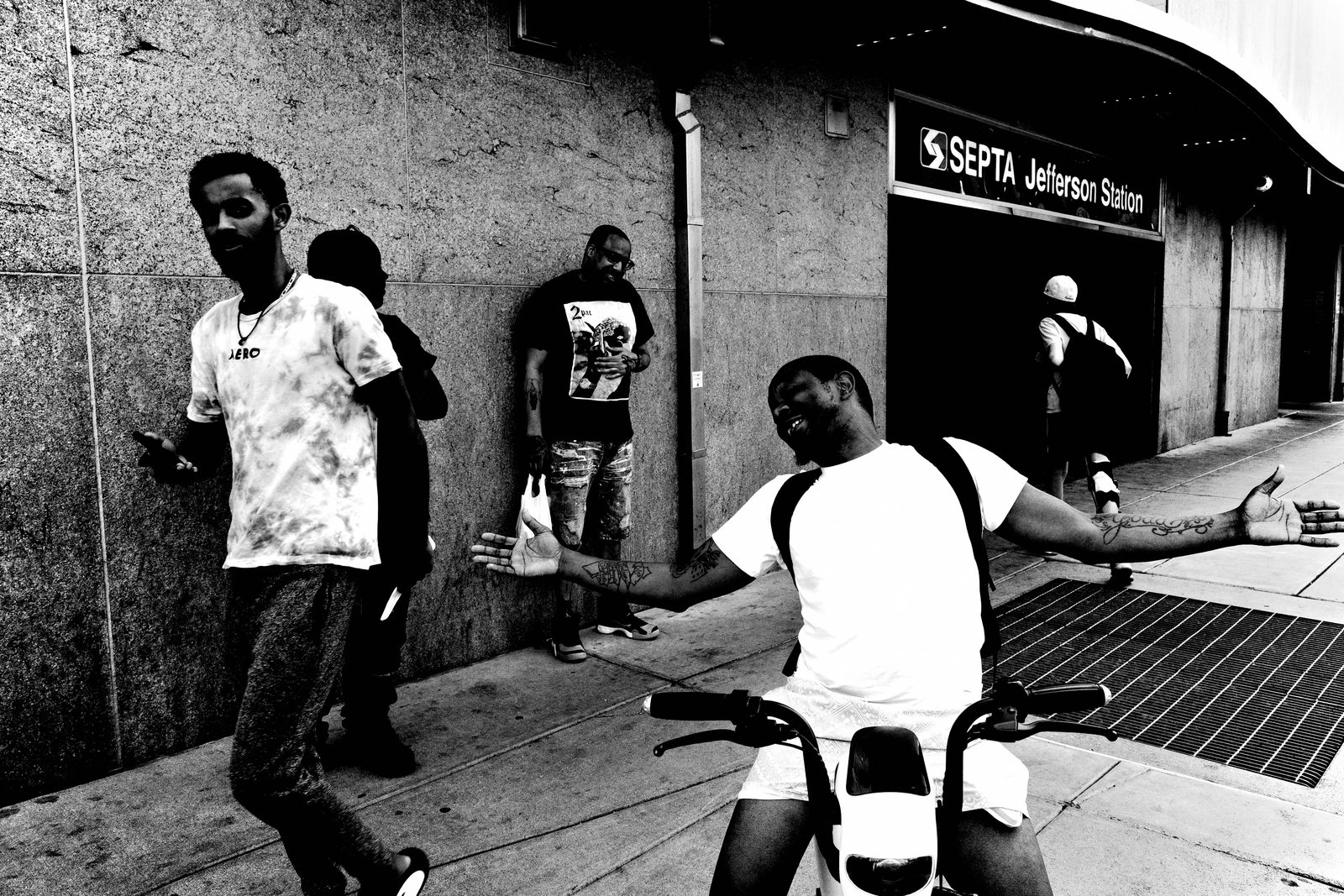
You'll arrive at something striking — a monument, a mural, a dramatic backdrop — and know you have to make a photograph, but have no idea how yet. The subject alone isn't a picture. So you wait, and you work your position, until a second element enters and rhymes with the first: a person whose posture unconsciously mirrors a statue's, a gesture that repeats a shape in the scene. That echo is the photograph. Patience and positioning make all the difference. You don't always know the frame before you find it. Stay at the scene. The photograph reveals itself.
Photography Fuels the Lust for Life
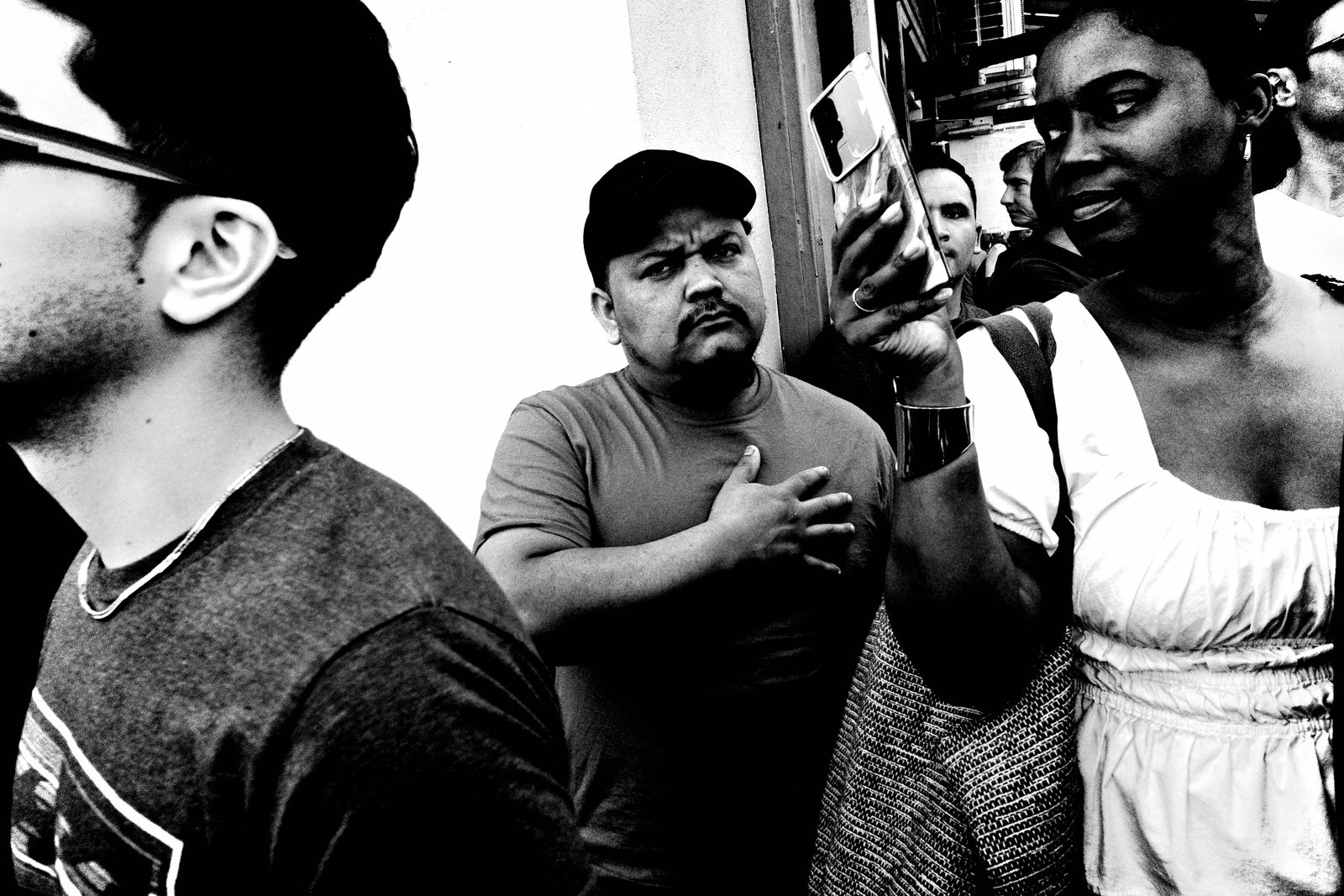
This is what every frame that works has in common: it's proof of a life fully lived. Photography fuels my lust for life. If I can share that with even one person, it's all worth it. The camera isn't a device for collecting images — it's a reason to wade into water, climb to high places, sit with strangers in their joy and their grief, and chase the light across the day. Photography is how I say yes to life, every single day.
PRACTICAL APPLICATION
Return to First Principles Daily
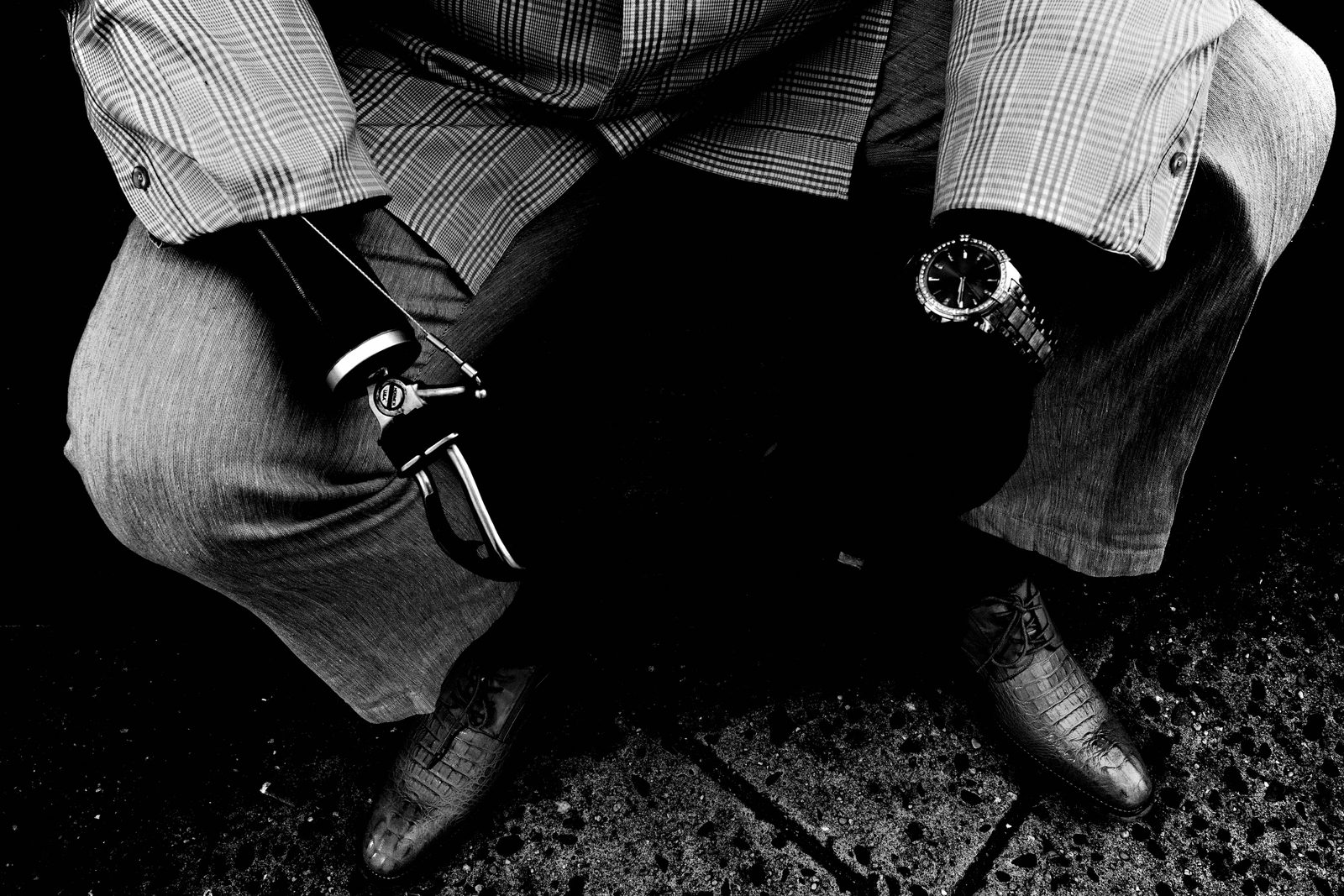
Here's your practice. Before every shoot — whether it's your block or a city you've never visited — return to first principles. Be present. Engage with humanity. Observe everything. Solve visual puzzles. That's the whole approach. Four lines. They hold in any culture, any climate, any language. They'll hold wherever you're going next.
Go to the Outskirts
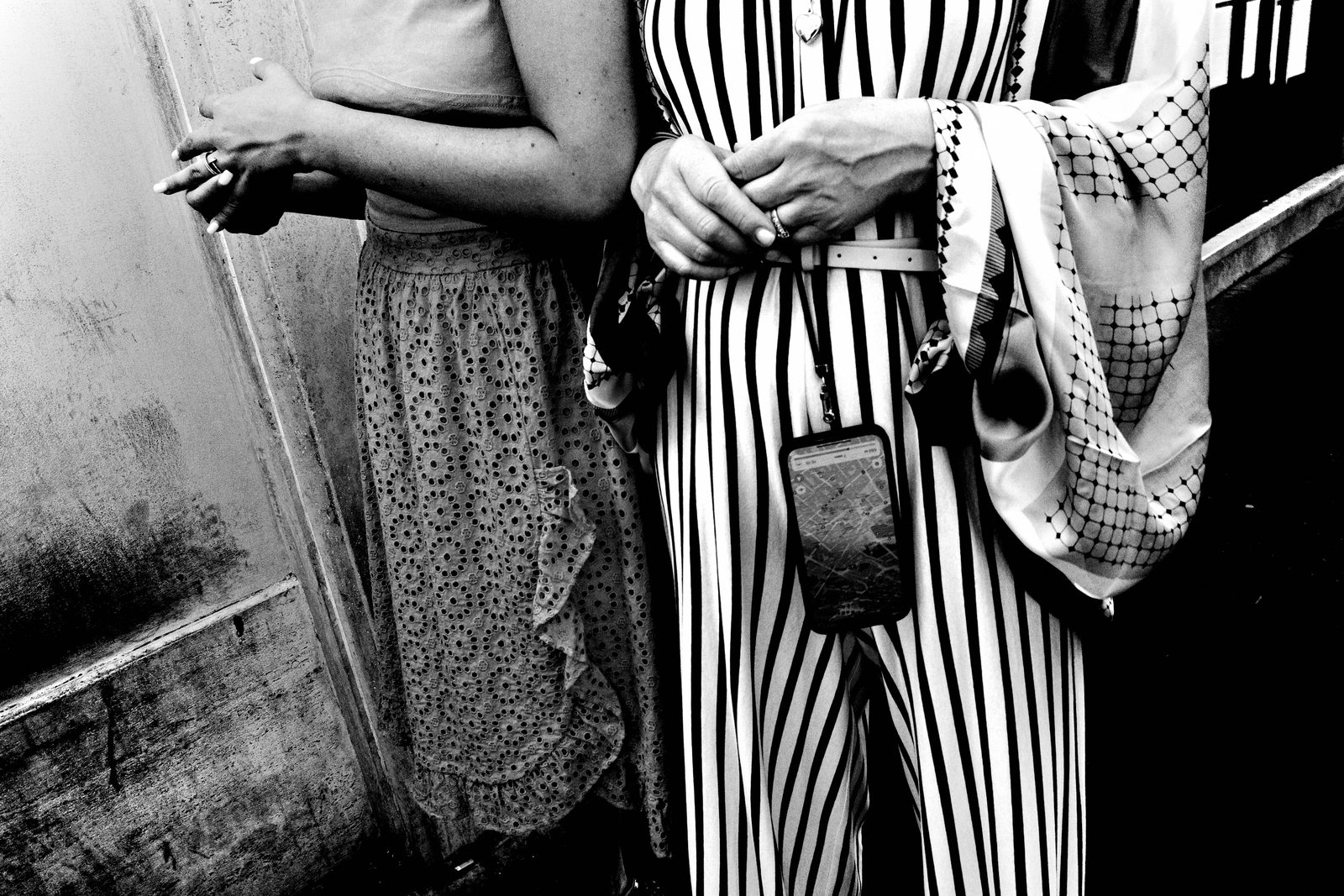
And push yourself past the obvious spots. Go to the outskirts. That's where the most fruitful photos are made — not always in the busy markets. Construction sites, rooftops, back streets, the edges of neighborhoods. Curiosity is directional — let it pull you somewhere you haven't been. The extraordinary hides in the places that don't look like photo locations yet.
Fish One Scene Completely
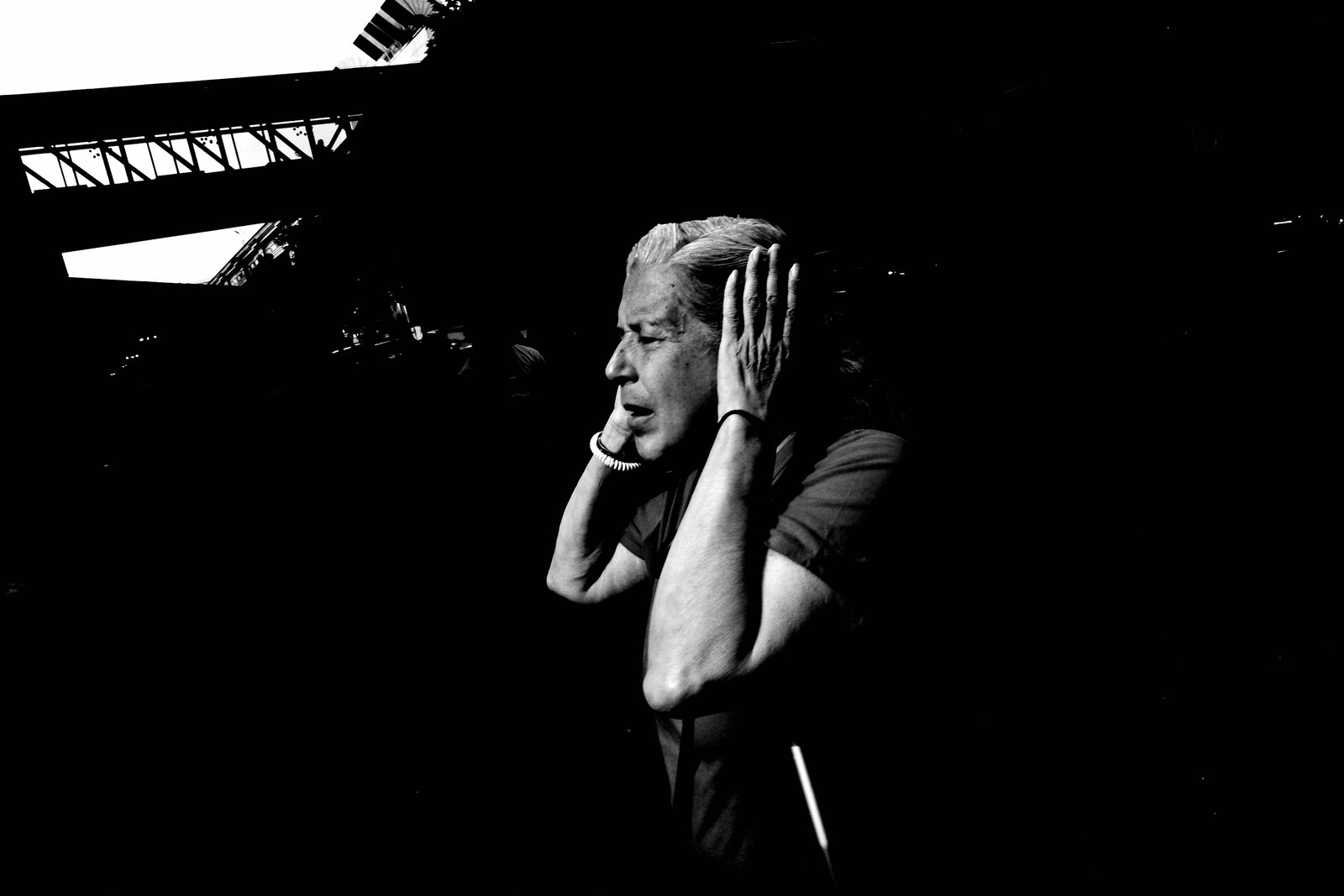
Choose one location this week and commit to it fully. Work back to front — anchor your background first, then wait for the foreground to fill. Stay until the scene leaves you, not until you leave the scene. I don't leave the scene until the scene leaves me. That patience is what separates a snapshot from a photograph with real narrative weight.
COMMON MISTAKES
Chasing the Busy Center, Missing the Quiet Truth
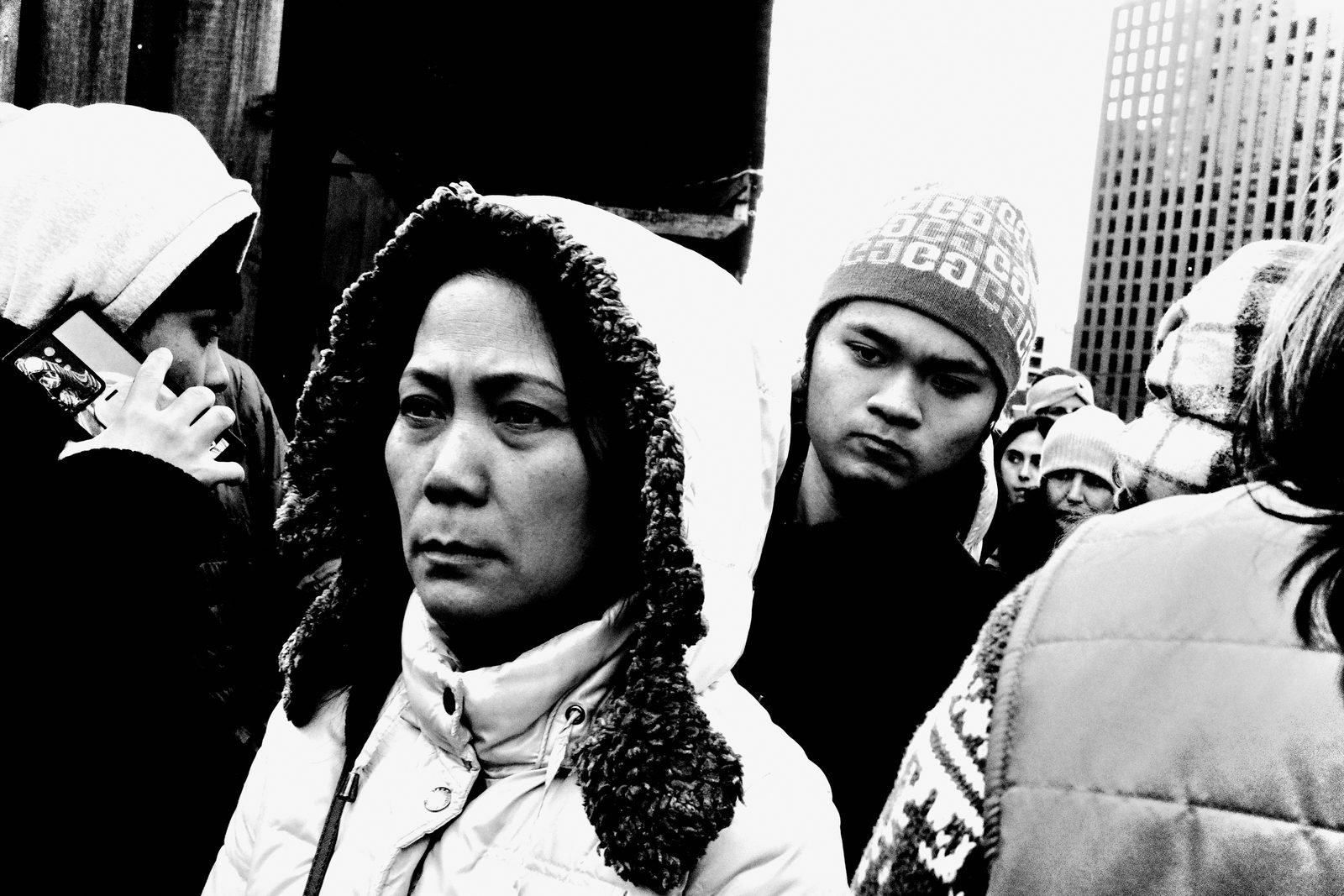
The mistake I see constantly is chasing the loudest, most crowded scene and assuming that's where the photos live. Sometimes it is — but often the real moment is happening at the edge, in the quiet. Don't let foot traffic make your decisions. Let curiosity lead. The outskirts reward the curious. The center rewards the impatient.
Developing Without Reviewing With Patience
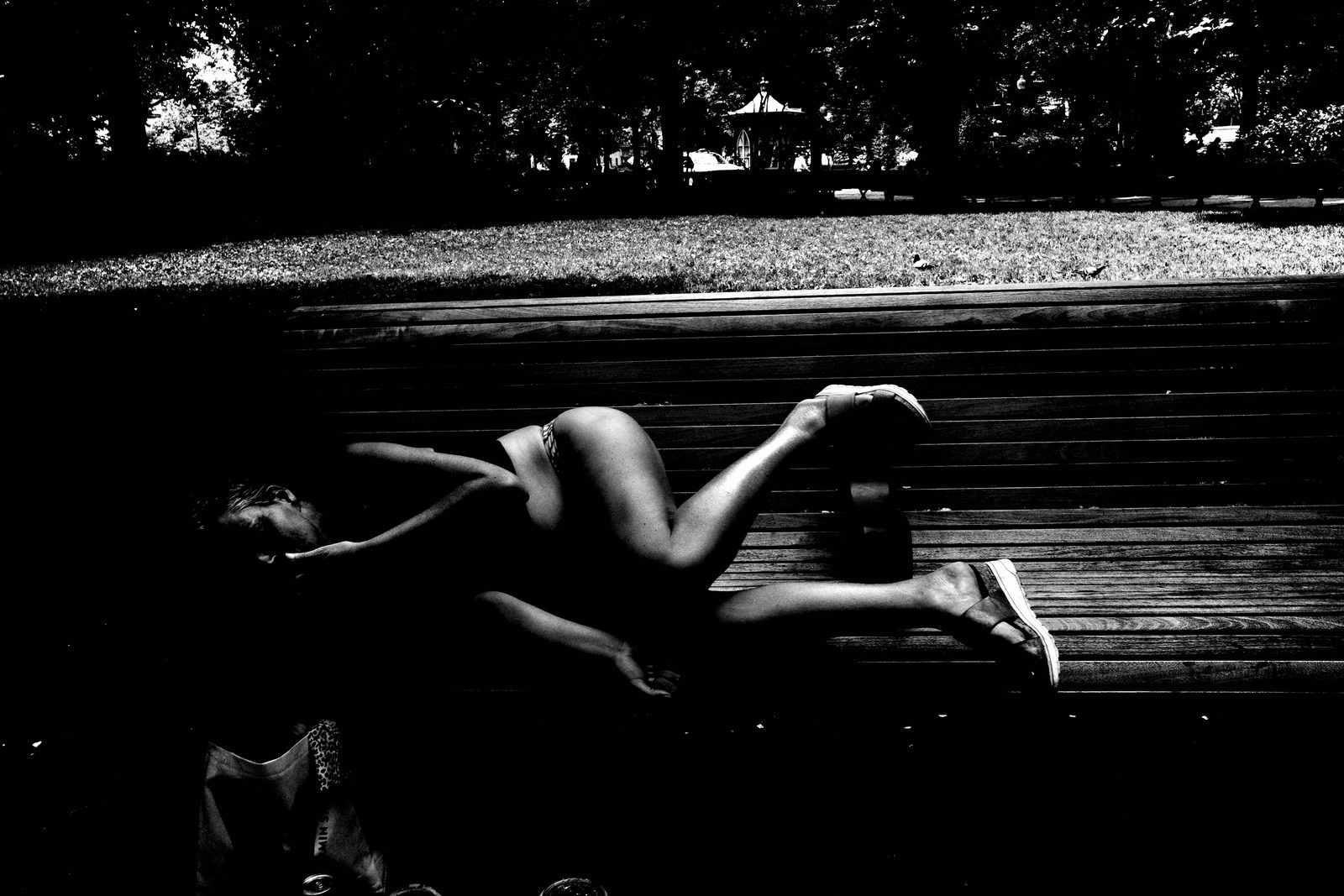
The other mistake: rushing the review. The camera often reveals what the eye cannot — but only if you look slowly and carefully. The hidden rhyme between a tattoo and an object, a cast shadow that mirrors a painted shape, a piece of architecture that quietly frames your subject — none of these register in a quick scroll. Sit with your images. Study every corner of the frame. The photograph you almost missed might be your strongest one.
RELATIONSHIP TO PREVIOUS
Building on the Breakdown Series
Lesson 048 gave us a concentrated compositional breakdown — a close look at how a single frame is constructed. This lesson extends that thinking across an entire body of work. Where one frame introduces a principle, seeing it recur across hundreds confirms it. The through-line is always the same: presence, engagement, visual problem-solving. Lesson 048 planted the seed; today we see the whole garden.
SUMMARY / TAKEAWAY
Be Present, Engage, Observe, Solve
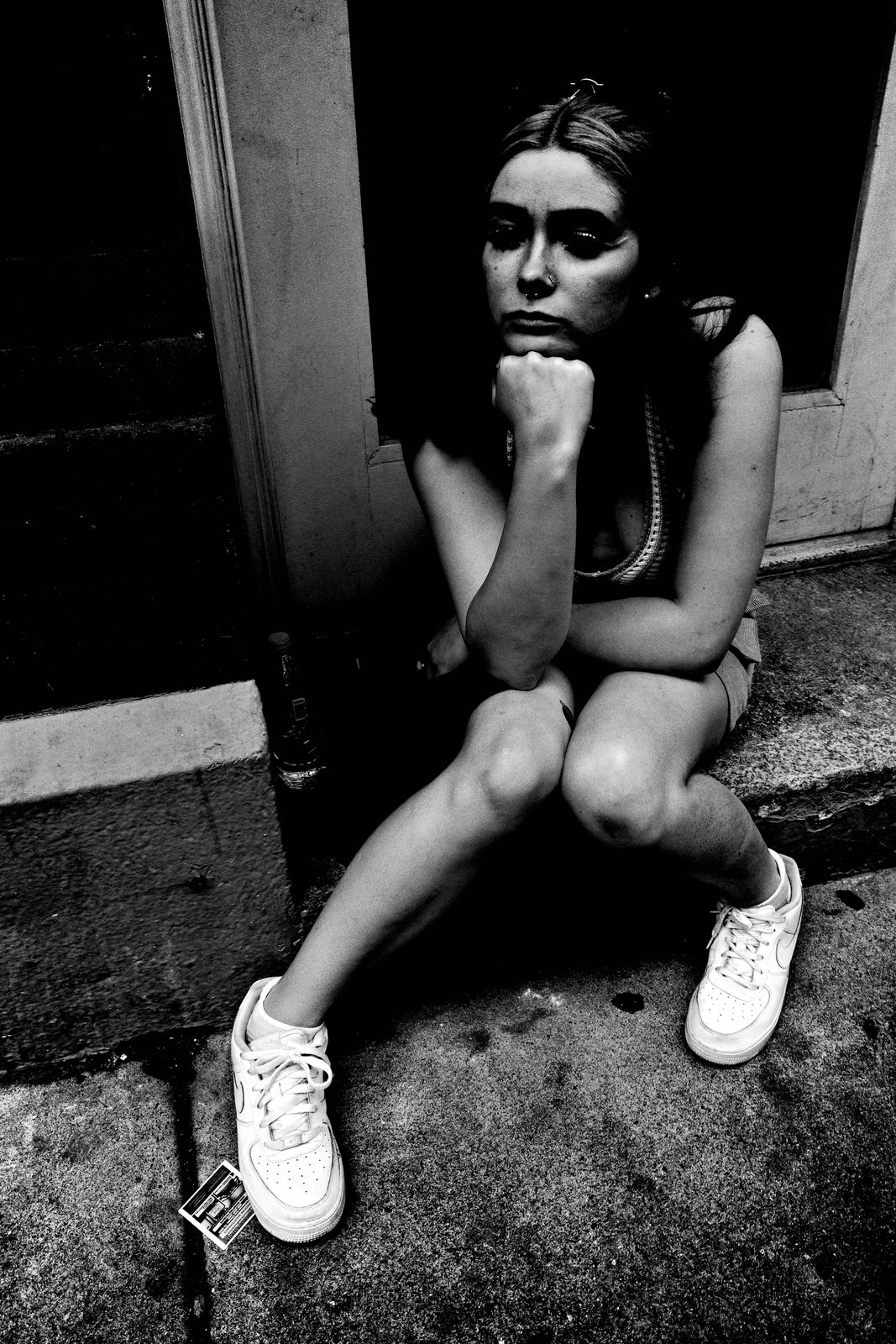
Last thing. Every strong frame — no matter the street, the year, or the country — comes back to the same four words: be present, engage, observe, solve. Photography isn't about photography. It's about life. The camera is just the tool. Go out there, engage with humanity, look at everything, and solve the visual puzzle in front of you. That's the whole practice. Catch you in Lesson 050.